

Under the Influents
Algae, wastewater, and down-to-earth biorefinery

If humanity is going to take our *stellar* track record of planetary colonization interstellar, algae will likely come along for the ride. Even NASA thinks of algae as some of the MVPs (Most Versatile Payloads) that could support human life in space (in transit and in perpetuity). And as we’ve discussed with Eugene Wang of Sophie’s Bionutrients, a bit of microgravity helps the algal cell grow well.
But beyond the novelty, “algae in space” presents a neat dichotomy of head-in-the-clouds, research for research’s sake, and the feet-planted-on-the-ground pragmatism of applied science. Spacey vs. Earthy. In real terms, the research isn’t either/or, as innovation often cross-pollinates and seeps out into the world. But as an illustrative comparison, it presents a fork in the road: Solve for the here and now? Or for somewhere, sometime?
One of those very Earthy problems (and I’m told there are a handful…) is paying too much to manage an excess of nitrogen and phosphorus in wastewater. In the eyes of your typical beholder, this is not a particularly “sexy” problem.
After all, municipal wastewater management is not exactly jostling with AI hegemony, data centers in space, and GLP-1 mania for financial media coverage.
But to The Blob, effectively capturing the value of excess nutrients (using algae) has a beauty that Ozempic’d cheek bones could only dream of, with a very “rocket emoji” trajectory. Just instead of no nutrients to waist, it’s no nutrients to waste. Or, organism-market fit: the circular biorefinery model hiding in plain sight.
WASTE INVADERS
For Martin Gross of Gross Wen Technologies, the space question was both academic and highly practical. As a graduate student at Iowa State University, Martin Gross began his research, alongside his eventual co-founder Dr. Zhiyou Wen, along two tracks: Space (algae culture systems under microgravity conditions) and Earth (an economic biofilm-based cultivation and harvesting system).
In keeping with a heartland ethos that merges innovation with no-nonsense practicality, Martin Gross and Zhiyou Wen chose to build local. Gross Wen Technologies (herein: GWT) later emerged from the lab with a deceptively simple wastewater solution, drawing inspiration from the Iowa landscape, paired with a deep understanding (2 founders, 3 PhDs among them) of the fundamental algae diet.
And luckily for Earth, we are not alone in the algae-meets-wastewater universe. While GWT may well be considered a flagship (literally owning the domain, algae.com), the market demands an armada, and it’s currently being assembled, from promising pilots to commercial-ready systems worldwide.
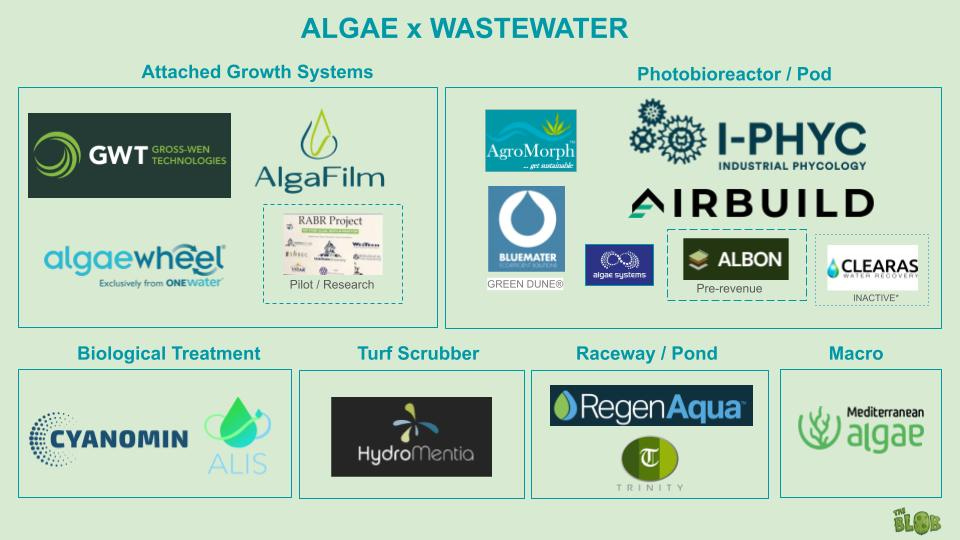
The water industry may be slow, conservative, highly regulated, and risk-averse (and reasonably so, given the stakes), but we are at the precipice of a Great Acceptance. These are proven technologies, with “growing” validated track records to match.
From wheels to forests, and ponds to pods, there’s never been a more exciting time for algae wastewater treatment.
ATTACHMENT THEORY
As someone with too many algae-related Chrome tabs open at any given time, I had been peripherally aware of algae’s use in wastewater. But I really started to tumble down the RABbit hole [sic] late last year, after a chance connection at WesTech Engineering, and a catalyzing conversation with Dr. Ronald Sims of Utah State University about the Rotating Algal Biofilm Reactor (RABR).
As some readers may know, I’m working on a project to permit/build/operate a floating, East River water-filtering swimming pool. And it’s like a little water treatment facility, given the components of the advanced treatment train (UF to UV).
The engineers responsible for the filtration equipment are the fantastic folks at WesTech. If you get the chance to work with them, count your stars (they’ve been great). While algae link-hopping one day, I came across an algae wastewater pilot project (the RABR) led by a team at Utah State University, with support from WesTech (who are also Utah-based).
Fascinated, I reached out to our WesTech team on the pool project, as an aside. Luckily, not only had a project team member worked on the project, but they were also an algae biofuels veteran and had studied with the project lead, Dr. Sims.
Some emails and calendar alignments later, and I ended up speaking with Dr. Sims for about 30 minutes on Zoom; a conversation that would alter my perspective on algae cultivation and its potential role(s) in the bioeconomy (or, as I hope, what we will just be calling “the economy”). So it only seems right that we start in Utah.

HARM-FUEL ALGAL BOOM
It’s inescapable to forget, but not necessarily household knowledge, that the US government has traditionally had a “thing” for algae, and algae fuels especially. As any Mean Girls fan will understand, algae biofuels have been the “fetch” of the Department of Energy since Jimmy Carter’s Aquatic Species Program (ASP).
And the late 2000s through to the early 2020s were especially heady times. The Department of Energy (DOE) Bioenergy Technologies Office (BETO), Office of Fossil Energy and Carbon Management (FECM), ARPA-E MARINER, and the Biomass Research and Development Initiative (BRDI) -- hundreds of millions of dollars were deployed in a relatively short time frame to support biofuels research.
And it’s under the auspices of this boom (which, spoiler, went bust) that a lot of other algal innovations were spawned. So yes, petroleum has consistently won the race to the bottom on fuel costs, but we’ve got cosmetic innovations, cooking oils, fats, polyurethanes, bioplastics, and the like from the ashes of that (*winces*) failure to launch.
So Dr. Sims and colleagues at USU’s Department of Biological Engineering first designed and developed the RABR in 2012 to harvest algal feedstock for biofuels. For many in applied algae research, biofuels were the open door for both funding and focus. In order to solve one of the major commercial bottlenecks for algae (harvesting them from the water), the RABR design focused on the production of a biofilm, effectively skipping the need for flocculation and expensive centrifugation.
What resulted for the USU team (and the GWT team at Iowa State, separately but around the same time) was less a shift in the renewable energy paradigm and more a novel approach to wastewater treatment.
RABR, RUN
The RABR design consisted/consists of a large tank holding nutrient-rich wastewater and a rotating shaft connected to a series of flat panels. The panels slowly rotate on the shaft, dipping and lifting attached algae from the wastewater into the air and back down again, on loop. The most recent installation at Central Valley Water Reclamation Facility scaled the system to a 12,000-liter (3,000-gallon) outdoor pilot.
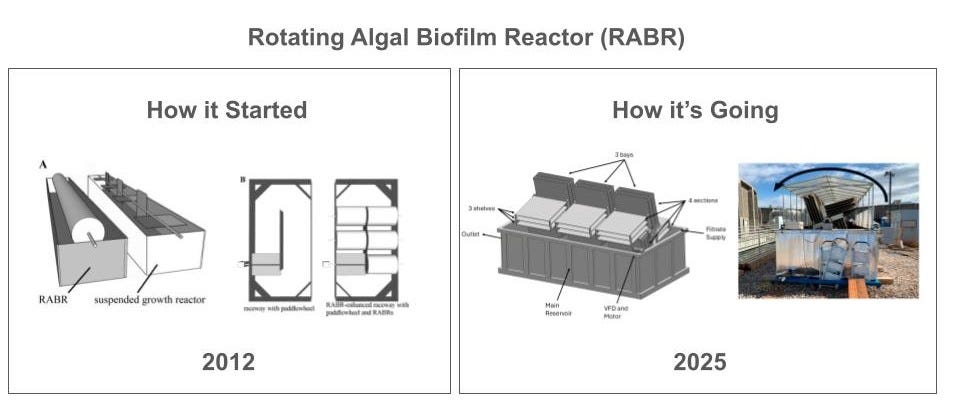
Rotation in this case is simply (literally) revolutionary. Compared with traditional raceway ponds or more expensive photobioreactors, the rotating attached growth method could grow a lot more algae in a lot less space. You can basically mechanically upwell algae into the light to drive photosynthesis, then feed it again. For a commercially viable raceway facility, you need acres of non-arable land, maybe hectares, because the ponds themselves need to be fairly big and shallow (for the light to reach into the pond).
It’s not apples-to-apples, but the pilot reactor at Central Valley had a 72 m² growth surface area and an 11.5 m² footprint. So instead of a 1:1 ratio of surface area to footprint (just a big, shallow pond), the RABR was about 6.5:1.
When I spoke with Dr. Sims about the RABR’s past, present, and future, I was fascinated by the attached growth design, which was new to me. But I was equally intrigued by the literal pipe dream of a plant manager near Central Valley, whose vision was to run an entire operation on algae valorization revenue. Instead of sending ratepayers a bill to manage their wastewater, for example, why not send them a check?
If you could fully valorize the biomass (from methane, to compost, and algal bioproducts), that revenue could flow back to the people. Apparently, there was an attempt that ran into technical difficulties (oxygen trapped in sealed glass pipes becoming toxic, killing the culture, mechanical pigs for miles to prevent fouling), but this is just a dream deferred, and it seems an increasingly viable reality.
I was also hooked on the implications of one of the potential bioproducts.
In 2024 the USU team published their Techno Economic Analysis (TEA) of the RABR pilot, looking at the viability for both biofuels and bioplastic production methods. This would be perhaps the last hurrah for funding from the DOE’s BETO, who was the primary funder (to the tune of $2.5M).
What came out of that techno-economic analysis was that liquid fuels simply aren’t feasible with the system. Not a shock. However, bioplastics came out at 120% of the TEA benchmark (so profitable), which was the strongest result. Fertilizer apparently showed potential, but partners at the DOE didn’t want to include it in the official TEA, given their determination as “low-margin” (turns out these low-margin products were the basis for an actual business model. But more on that later).
FIRE PHYTERS
Bioplastics are cool, sure. If I could surf, I would want an algae-based surfboard. But you know what’s really cool? Wildfire prevention… And algae production from the RABR proved to have some unexpectedly cool results.
In the phase of the rotation when algae are mid-air, some evaporation takes place. A low-to-moderate amount. In Utah’s low-humidity environment, algae’s metabolic activity actually adjust during that airborne evaporation phase, raising pH within the biofilm to about 10 (more alkaline/basic). Combined with a high magnesium content in the local groundwater (due to natural geological weathering) and the concentrated nitrogen and phosphorus in the wastewater, this caused struvite crystals to form naturally in the biofilm. Outside Utah, struvite would typically be soluble.
As it happens, struvite (MgNH₄PO₄ · 6H₂O) is an exceptional ignition preventer/wildfire deterrant. Commercially, there’s really only one product on the market now, the dominant Phos-Chek. You may have seen this red powder getting deployed by airplane over wildfire areas and park forests in California recently, as a preventative measure.
One day, Dr. Craig Criddle, a USU graduate now on faculty at Stanford, called Dr. Sims about the results of the RABR TEA. He’d been working with a California company looking into wastewater struvite as a fire retardant, and had recently published a paper on the subject. His team determined that a generic struvite-based formulation has ignition-preventing performance that equals that of the commercial juggernaut Phos-Chek, with added ecological benefits (like phosphorous mining prevention and plant health benefits), all at a price that works.
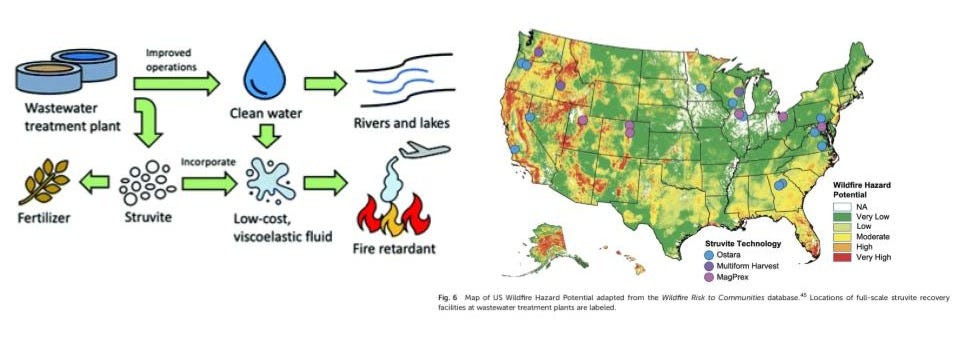
Back of the napkin, Dr. Criddle estimated that struvite for fire retardants was worth 10 to 20 times more than the bioplastic application the USU team outlined in the TEA. At most wastewater plants, you’d need to add magnesium chloride to get the struvite needed for a fire retardant. Even with the addition, the economics still pencil. But in Utah, those levels are already high enough in the groundwater, a local bonus.
The only problem is that Phos-Chek seems (oddly) to be a fiercely and perhaps unethically guarded monopoly when it comes to Parks contracts. So the real issue isn’t the science, it’s the people drawing up the contracts (as always, am I right?).
STREAMING SERVICE
The RABR system continues to be tweaked, and the commercial pathway is unclear at the moment. But it’s earned a totem in the canon of algae wastewater, and is among the pioneering designs for rotating bioreactors. As a pilot, it’s also pointed to grander ambitions for revenue streams and possible products.
And as we’ll see a bit later, when we talk about the downstream “toxicity question,” it’s not the only emerging wastewater story from Utah these days. But before we get into any discussion about processing and downstream value capture, we’ve got to talk about the chemistry of nutrient capture. Because for wastewater, using algae just makes sense/cents, regardless of what you make with it downstream.
When Martin Gross explains this process to people unfamiliar with algae, to non-specialist podcast hosts (or investors, maybe), he puts it simply as this: algae eat nitrogen and phosphorus. Of course, it’s not exactly that simple, and most people either don’t care or don’t need to know any finer details of the biochemistry. For better or worse, I am not one of those people.
LET THEM EAT WASTE
Algae don’t ask for much. They need water, sunlight (not always), and nutrients. Specifically, if algae are to be fruitful and multiply, they need nitrogen and phosphorus.
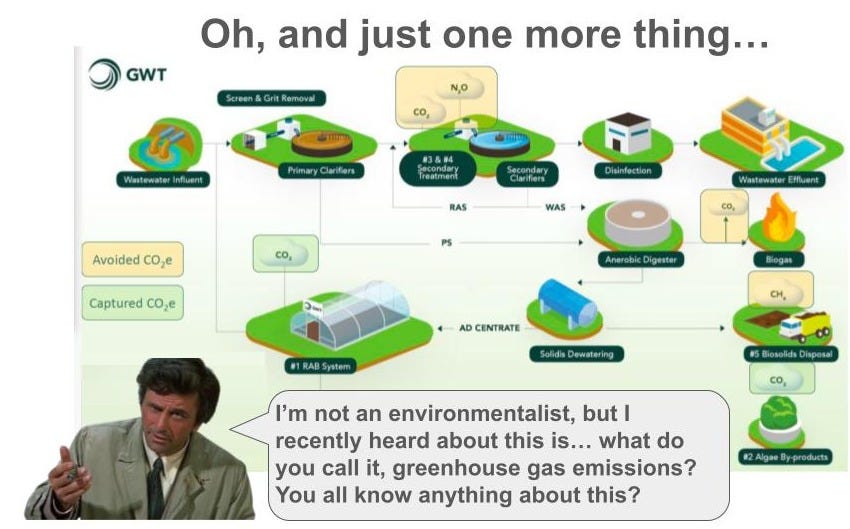
Of course, that’s not all they need. Running Tide (not to keep picking on them) learned the hard way that in the open ocean, iron can be a bottleneck. And diatoms, to create their spectacular crystalline shells, need silicon. Famously, algae also need carbon to grow. For operators interested in Scope 1 and 2 emissions, that could be interesting, since the traditional process is a net emitter of CO2, methane, and nitrous oxide. GHG reduction is an operational byproduct and a climate story, but The Blob does not recommend selling voluntary credits. There’s a host of other macro and micronutrients algae consume, but in the context of wastewater, arguably none are as important as nitrogen and phosphorus.
Nitrogen is the foundational chemical building block for amino acids, which form enzymes and structural proteins, the working components of the cell. It is also a core element of chlorophyll, which enables photosynthesis. Phosphorus is both a structural component of ATP (adenosine triphosphate) molecules, which are the locus of cellular energy, as well as the backbone of DNA and RNA.
In natural waters, phosphorus and nitrogen are usually the “limiting nutrients,” so depending on their availability, algae will feast or famine. A sudden spike in phosphorus or nitrogen can trigger a massive population explosion. Just ask anybody living on the Florida coast (and we’ll talk about HABs in a bit more detail later). In wastewater, where the nutrients are abundant (but controlled), algae turn from foe to friend.
NĪT MOVES
Nitrogen shows up in several forms in wastewater. From nitrate (NO₃⁻) to nitrite (NO₂⁻), ammonia (NH₃), ammonium (NH₄⁺), and dissolved organic nitrogen compounds, like urea. All else equal, though, algae prefer ammonium. Relatably, because it requires the least effort to consume. And note: ammonium and ammonia are measured together, but not the same!
In order for nitrogen to form amino acid building blocks and do the cellular work, it needs to be converted to an electron-rich configuration, which ammonium already has. Ammonium is also positively charged, so there’s a natural binding at the negatively charged algal cell surface. It’s algae’s equivalent of a DoorDash/Deliveroo order.
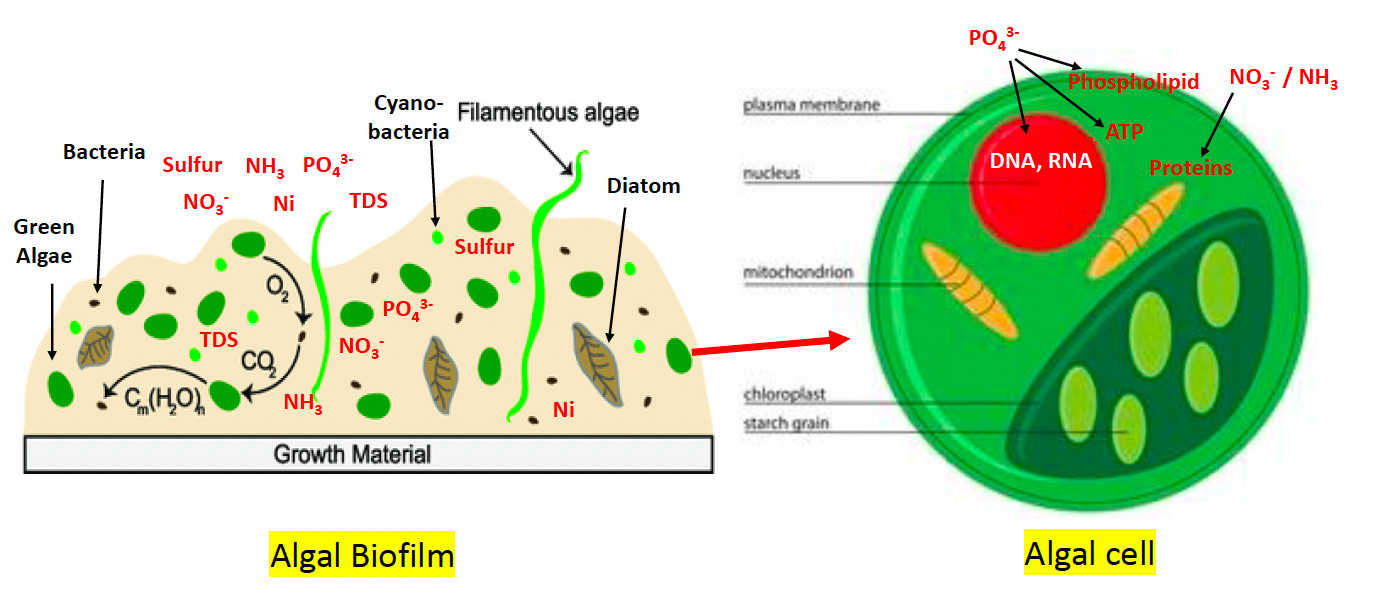
Free Ammonia, though (NH₃) is toxic and can affect photosynthesis, slowing growth. Since ammonia and ammonium exist in a dynamic equilibrium, the algae are happy when the pH and temperature are relatively neutral. But if those two factors shift (more alkaline, hotter temperature) that could mean a shift to free ammonia, which evaporates as a gas. And we don’t want that.
But algae will take the nitrates and the nitrites, sure. They’ll need to “reduce” them, or convert them to a less oxidized state, adding electrons before they’re useful. That conversion process takes energy, and algae would rather skip it. It’s algae’s equivalent of a HelloFresh/Blue Apron. Also a convenient meal, but a bit more work.
If ammonium is depleted or scarce, algae will reluctantly get off the couch (so to speak) and shift to the laborious uptake of nitrate and nitrite. Another example of nature’s sublime laziness, and the reason wastewater teeming with ammonium (or urea, which many species can also take up directly) is great for algae growth. Once in the cell and available as ammonium, it enters something called the GOGAT cycle, which I (full disclosure) do not fully understand. But after that process, the nitrogen-in-wastewater-to-amino-acid pathway is complete.
FEAST-PHOROUS
Phosphorus takes somewhat of a different route. Wastewater phosphorus mostly shows up as inorganic orthophosphate (PO₄³⁻) and, to a lesser degree, as dissolved organic phosphorus compounds. Like the nitrate (NO₃⁻), nitrite (NO₂⁻), phosphorus requires active transport. Specialized phosphate transporter proteins embedded in the cell membrane move phosphate ions across the membrane. And since phosphorus is negatively charged, these ions have to move against the concentration gradient. That process requires energy (no easy ammonium pathway there), but algae do something special with phosphorus once they have it: they save (/hoard) it.
It’s a process called “luxury uptake,” one of my favorite new terms. Have you ever traveled abroad and found a snack brand that you really like, but you’re not sure if you’ll ever see it again, so you stuff half your return suitcase with (undeclared) potato chips? If so, you’re an algae person.
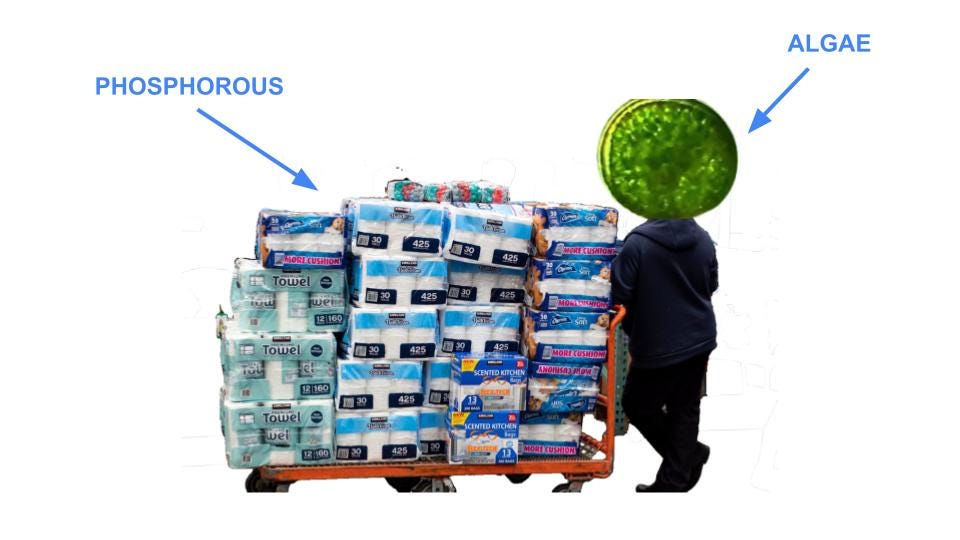
Many algae species will continue to transport phosphates into their cells way beyond what’s needed for growth. Evolutionary logic asks: “When are you ever going to find these snacks again?” The result is a surplus stored as chains of inorganic phosphate units linked by high-energy bonds, for if and when phosphates become scarce.
Algae’s nitrogen fast-food pathway and their phosphorus scarcity mindset -- two traits that aren’t a great look on a human -- make them a biological dynamo in wastewater.
LE FILM VERTS
It’s not a great combo in a new college roommate, but algae are also clingers that are really “into film.” Biochemically speaking, of course, they are natural “film-makers”. This is a common observation, and one of the first things people think about when the word algae comes up in conversation or print. Just observe the layer of biofilm on rocks covered in “scum,” the hull of a moored boat, the walls of a neglected swimming pool.
If you need to clean your aquarium, this natural propensity to create biofilms is a hassle. But if you’re running a wastewater treatment facility, like, say, the O’Brien Water Reclamation Plant in Chicago (a GWT pilot site, and one of the largest wastewater treatment facilities in the United States), it’s actually just smart capex.
At the molecular level, this comes down to algae’s ability to secrete specialized biological “glues” called Extracellular Polymeric Substances (EPS). EPS are a viscous, gel-like polymer blend composed of polysaccharides and proteins excreted by the cells.
EPS creates a net-like polymer network that allows individual cells to connect to one another and provides structural stability. So they help cells adhere to solid surfaces and to form a cellular community. Crucially, one that’s tough to wash away.

That stickiness is facilitated by algae’s hydrophobic, negatively charged cell wall. In the water, this is one of the reasons algae is so tricky to harvest; they chemically repel each other. But as a film, negatively charged functional groups in the cell wall (carboxyls, hydroxyls, phosphates, sulfates) facilitate adsorption and electrostatic interactions that help the algae stick to surfaces, and then to each other via the EPS.
Ultimately, forming a sticky community is an evolutionary strategy. By forming biofilms, algae can remain in nutrient-rich environments and develop a reservoir of essential elements within the EPS network to ensure continued development. It allows for rapid growth and quick colonization. From helpful algal blooms to harmful ones, algae are indifferent. They’ve figured out how to grow fast; it’s now on us to do the adapting.
FLOCC N’ ROLL
But algae doesn’t exist in isolation within these biofilms, either. It’s not an algae film. The films consist of a consortium of bacterial and fungal cells, forming a mutualist community of microbes. And it’s this relationship that lies at the “core” of the Algaewheel technology.
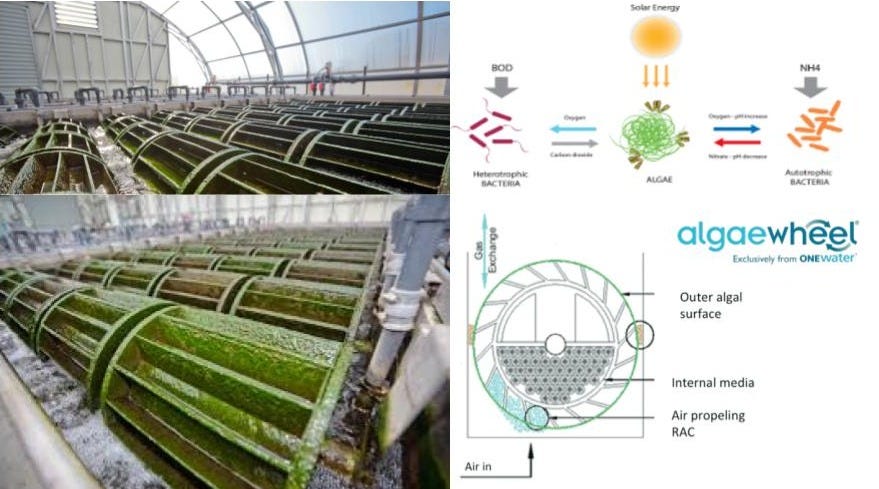
Developed by OneWater Inc. and now something of a commercially mature algal technology (invented in 2000, with real investment toward commercialization since 2010). Algaewheel takes a slightly different approach to attached growth. Still rotating, still algal, but instead of a porous textile/substrate, like the RABR or the RAB, the algae grow on tubular wheels, rotated by air bubbles released from a low-energy blower.
This Rotating Algal Contactor (RAC)™ design optimizes for the mutualistic microbial partnership, as the internal core of the wheels is filled with polymer media that serves as a high-surface-area home for a bacterial biofilm. The outer rim is what dips in and out of the water for nutrient uptake and air/light for photosynthesis.
The bacterial consortium in the core consumes organic waste and converts toxic ammonia into nitrates, exhaling CO2. The algae on the rim use the CO2 to fuel photosynthesis, which in turn provides the dissolved oxygen the bacteria require to continue their digestive work. In effect, it’s biological secondary treatment, with algae providing much of the oxygen (not reliant on energy-intensive mechanical blowers). It’s also a horizontally arranged system, with the rolling wheels arranged side by side.
By contrast, GWT’s design (perhaps inspired by the Iowan landscape) asks, “Has anybody been to a cornfield recently?” Many industrial crops, corn being a good example, don’t just grow in rows; they also grow in columns, out across the field and up towards the sun. It’s a system that’s been developed for both ecological and economic efficiency. So if you want to use a limited resource (land/real estate/facility footprint/nutrients) efficiently, you’d be wise to think vertical. When you grow up, you can use less space. A simple, elegant idea.
But GWT’s of-course-its-so-simple innovation, and probably the reason for their commercial trajectory, is in the harvest.
ALGICULTURE
Traditional algae harvesting is the most expensive and complicated part of the production process for cultivated microalgae, accounting for 20-30% of total production costs. It’s always been a bottleneck in the final techno-economic analysis.
The process is generally three-fold in both open ponds and photobioreactors, moving from a low-concentration liquid to a high-concentration paste, with each step requiring more energy. The low-energy/low-cost dewatering methods remove the vast majority of water. From gravity settling and natural sedimentation to flocculation, which involves adding chemical agents to help algae cells clump together, these initial steps can remove up to 95% of the initial water volume.
The remaining slurry needs to be powerfully spun through a centrifuge to separate the heavier biomass from the remaining water, producing a thick, green paste. While effective, it’s one of the most energy-intensive steps in the process, with energy requirements estimated at 1.3-8 kWh per cubic meter (264 gallons) of culture processed. And until energy is free, this is not a cost-effective option to achieve industrial scale.
Of course, you could always just get yourself a Zobi Harvester from Global Algae, perhaps one of the more enduring innovations of the BETO biofuels boom. It’s a highly efficient, scalable harvesting system that combines primary and secondary dewatering, all at ambient pressure (so less energy than centrifugation). Even so, it’s still a capex consideration, including equipment, installation, and maintenance.
Attached growth algae systems like GWT’s Revolving Algal Biofilm (RAB™) System posits another method that’s even less energy intensive, something you might pay a neighborhood kid to do for pocket money: just scrape it off.
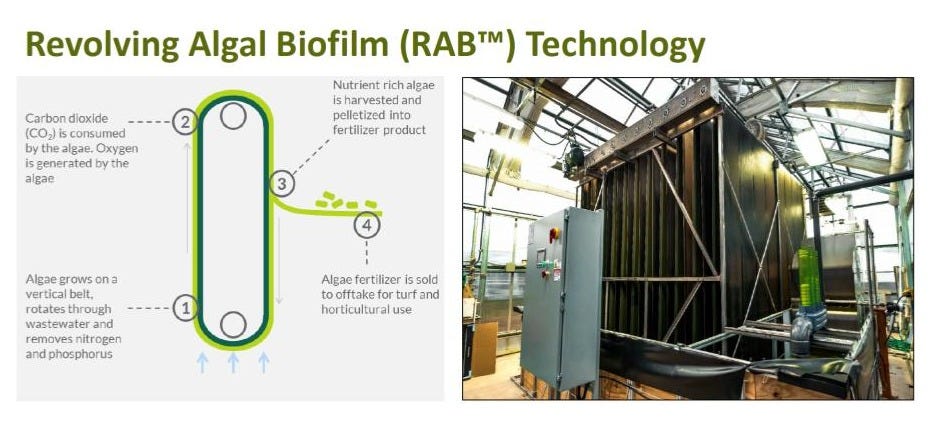
Ernest Hemingway is famous for his economy with words: Baby shoes for sale. Never used. A complete picture of human drama in six words. GWT writes a story of technical innovation a la Hemingway; a solution for algae’s biggest commercial hurdle in six words: Algae biofilm grown vertically. Scraped cheap.
VALUE CAPTURE
I found a “market study” that confidently valued the “Global Algae-Based Wastewater Treatment Market” at $1.45 billion in 2024, with a forecast to hit $4.12 billion by 2033, growing at a CAGR of 12.4%.
Of course, this is probably a mixture of slop and charlatanism, another bold attempt to try and sell me a slapdash report. This is an issue endemic to market research in general, but it seems particular to market “intelligence” on algae-based products or services. For example, most of the companies profiled were not in the business of wastewater treatment at all (closer biofuels or HAB mitigation).
But directionally, despite the false pretense, it would seem that algal wastewater is well-positioned for significant growth, for some very real reasons. And while it may take forever to earn trust and a track record in the water industry, the data is tipping in algae’s favor. By 2023 GWT had collected >10,000 data points from 25 projects deployed at real wastewater plants. Algaewheel systems have deployed over 50 projects worldwide. Algafilm and Airbuild have both piloted real-world successes at municipal facilities.
To understand the algae’s value proposition in the wastewater industry, and the force behind the momentum, you have to understand what existing customers already need to pay for (and the writing on the wall for regulatory compliance and the useful life of infrastructure).
(PINCH) POINT SOURCE
One of the permits we’re mindful of at + POOL is the SPDES (State Pollutant Discharge Elimination System (SPDES) permit. The New York Department of Environmental Conservation has determined we don’t need one for testing our facility., as no chemicals are discharged back into the river after we filter them through the system.
We may have to worry about an inordinate amount of permits and approvals, but one thing we don’t have to worry about (for testing or beyond) is an NPDES (National Pollutant Discharge Elimination System) permit.
Under the Clean Water Act, Section 402, discharging any type of industrial, municipal, and agricultural waste through a “point source” into a “water of the United States” is not allowed (which is an objectively positive thing). That is, unless you have an NPDES permit.
For a wastewater treatment facility, this permit is what allows treated wastewater to safely discharge into a local receiving water body, like a river, stream, lake, etc. Assume you meet the controls and validations associated with compliance (which vary depending on the local water body), this is OK.
But the journey to compliance is no pleasure cruise, especially when it comes to an excess of Nitrogen and Phosphorous. It’s these chemicals that feed runaway harmful algal blooms. The algae growth itself can be overwhelming and unpleasant, with blooms effectively hogging vital sunlight from other marine organisms. But the death of the algae is the real killer. The algal blooms become a feast for bacteria, resulting in depleted dissolved oxygen, otherwise known as eutrophication, or the “dead zone” effect. No oxygen, no life. And then you’ve got a compounding cascade of things to worry about (ecosystem collapse, acidification, anaerobic bacteria triggering greenhouse gas tipping points, and other lose-sleep-at-night doomscroll fodder).
So nitrogen and phosphorus are consequential, for wastewater and for life. As described earlier, they’re generally in everything, everywhere, aggregating all at once, as the backbone of amino acids, DNA, respectively.
Since every living thing needs them to grow, they’re also found abundantly in the waste we flush and the runoff from the chemicals we plow into our fields. In their soluble forms (nitrates and phosphates), they also happen to travel well in water, and simple filtration does not fit the bill to manage their course through our water systems.
The bad news is also what we know to be the good news: they’re algae food. In this context, that means fuel for coastal blight. And harmful algal blooms (HABs) are going to continue to freak out coastal populations and stress local ecosystems. And for wastewater facilities that haven’t had a facilities upgrade since Jimmy Carter was in office, compliance with increasingly stringent nutrient management targets is a real problem. Smaller lagoon systems, rural communities, and industrial processors with high-strength waste are looking down the barrel at fines, forced upgrades, and potential lawsuits if compliance targets aren’t met. It’s a pinch point.
LAGOONA MATATA
Take lagoon systems, for example. These systems were relatively cheap to build and operate, which is why they were a common choice for smaller communities and municipalities, towns, and villages with less than 10,000 people. There are about 8,000 of these systems currently operating across the United States alone. 4,657, or over half of those lagoons actively discharging into surface waterways. And of that subset, nearly ⅔ (or around 2500) of those systems routinely exceed their permitted nutrient effluent limits.
So that’s the immediate opportunity; a practical and profitable target: municipal customers looking for an affordable retrofit that solves their problem.
This is the immediate focus of AlgaFilm, a rising star in the attached-growth ecosystem.
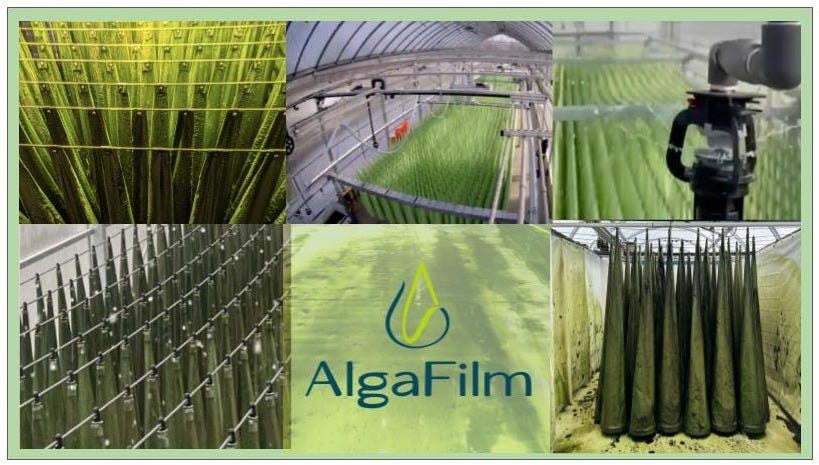
AlgaFilm’s core technology was developed by co-founder Pierre Côté, inventor of the ZeeWeed ultrafiltration membrane. So perhaps, an actual algae-based solution was pre-destined. ZeeWeed doesn’t feature any algae (micro or macro), but the filtration cassettes do resemble seaweed fronds, and since they were developed at Zenon Environmental, et voila -- ZeeWeed.
Pierre began exploring actual algae systems about a decade ago while consulting for algae biofuel-focused efforts. The conical bio-film capture technology from AlgaFilm is the R&D response to that costly, pesky harvesting bottleneck that everybody seemed to be running into.
I was lucky enough to chat with co-founder and CEO Ahren Britton (formerly CTO at Ostara), who explained that after about 5 years of development focused on carriers for algae biofilms, the AlgaFilm team landed on a stationary cone of cloth -- a substrate with a very beneficial 12:1 surface-to-area ratio, to allow for maximum growth in a minimal footprint.
The biofilm concept is the same as the USU RABR and the GWT RAB, but the mechanics are novel, innovative, and customer-friendly. Knowing AlgaFilm is Canadian, these attributes should come as no surprise.
The cones of algae cloth are made using a material designed for optimal biofilm attachment. The secret sauce on the material is unknown, but in public materials, GWT indicates they landed on a porous/textured nylon mesh. The cones are then suspended on wires in a sunlit facility, with the number of cones/footprint in direct proportion to the facility’s needs.
The wastewater influence is then piped above the cones, kind of sprinkled over them in a continuous flow. When green with growth, the draping biofilm-laden cones appear to be a “forest” of algae trees. Once the films reach a critical mass, they’re washed down by pressure and onto the concrete or polyethylene liner beneath them. It’s lather, rinse, repeat for wastewater. And for simplicity’s sake, there are virtually no moving parts. These cones stay stationary, soaking up the sun and nutrients to build up the films. No motors, very little actual “mechanics.”
AlgaFilm is still a young company, but their founding team is a water mega-group, and directionally, they’re stacking up some great industry partnerships and early customers. In 2025, Burnt Island Ventures invested. In 2026, they were selected for the Imagine H2O Accelerator cohort (joining a club with GWT, a success story from the 2021 cohort).
I don’t have too many details, and I’m sure they’ll emerge in due course in the appropriate channels, but they’ve got a Vancouver pilot with roughly a year of performance data, a 2025 commercial demonstration at the Kingsville Lakeshore West Water Pollution Control Plant in Ontario, and maybe an installation with a private developer building out a golf course subdivision.
But the first and best step is to target those lagoons. Keep is simple, cheap, and an easy decision for a small-town operator.
PITCHING A WEDGE
Equally compelling to Lagoons might be food and beverage processing, because these commercial/industrial customers have to manage the same kinds of nutrients and permit limits. The algae care about the nutrients, not whether the nutrients they eat are from a facility producing granola bars or whether they were flushed. Beyond food and beverage, the immediate industrial opportunities could apply to textile manufacturing, paper processing, and facilities that have similar needs and footprints.
What’s not in the mix, at least for now, are easy ways to fit into the treatment train for other industrial effluent, like mining, oil and gas, and chemical manufacturing. Algae is, after all, a living solution. Municipal and some industrial wastestreams produce high nutrient content, with a manageable level of toxic inputs, and some of the existing systems/streams in these industries produce chemicals at a scale that algae aren’t biologically suited to stream. And without some capex accommodations and pre-treatment, algae’s not there yet.
My first thought when starting research here was that agricultural effluent might be a natural fit, but that industry viability also hinges on discharge limits, and out-competing existing options. For many farmers (especially livestock), they can just cut out the middleman and apply their nutrient-rich waste directly back into the land and irrigation. It’s cheap and easy, and hard to compete with. But there may be a future where farms also face stricter discharge permits that prohibit direct use. That could then open the door for an algae-based alternative.
The right industrial customer should fit a certain profile to make sense, economically, and for the scale and footprint of the physical system. The low-hanging fruit, if you will. This means any algae system should slot into an existing treatment train as an upgrade rather than a replacement, where a new system can be bolted on or dropped in. At present, that often means customers with systems that include an anaerobic treatment step (to prepare the ideal nutrient stream for algae to grow in) that can be cost-effectively retrofitted.
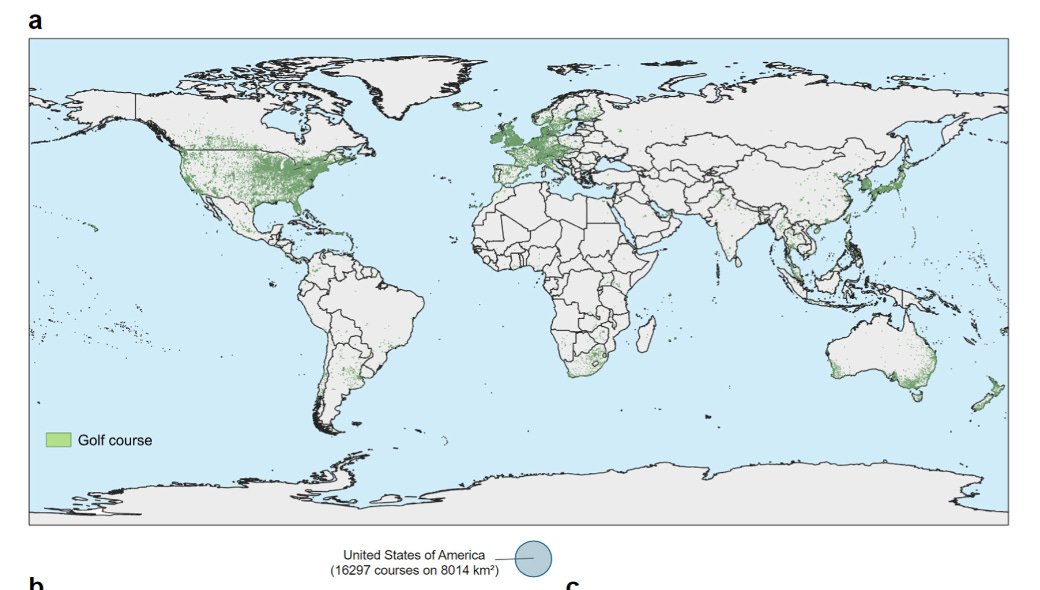
Or, honestly (and this is something I would like to explore more), what about golf? This is a bit of an aside, but golf courses are among the few customers who face both significant nutrient runoff challenges and the need for a lot of premium fertilizer. And I couldn’t put it more plainly than this article: Countries across the world use more land for golf courses than wind or solar energy. So how about some in-situ, closed-loop algae infrastructure by the clubhouse? It’s not for nothing that GWT’s pelletized fertilizer is “perfect” for tees and greens. Says so right on the front of the bag.
“NO TIPPING” CULTURE
“Sludge” is an excellent word. A bit heftier and more neutral than its relatives “slime” and “scum,” you don’t need to know anything about sludge to understand it’s not something you want.
In wastewater, sludge has two particular meanings, and depending on the influent (pardon me), distinct flavors. But it’s not just unpleasant. From an operator’s point of view, it’s even worse: it’s expensive.
Sludge management and disposal are expensive problems for a wastewater operator. I’ve seen some anecdotal references noting it’s about 50% of the operating budget. Some sources say it’s 20% to 60%, others say it’s 40% to 60%. It depends, it seems, on where you are and the kind of sludge you’ve got. But it’s a legible slice of the pie chart, right up there with labor and energy costs.
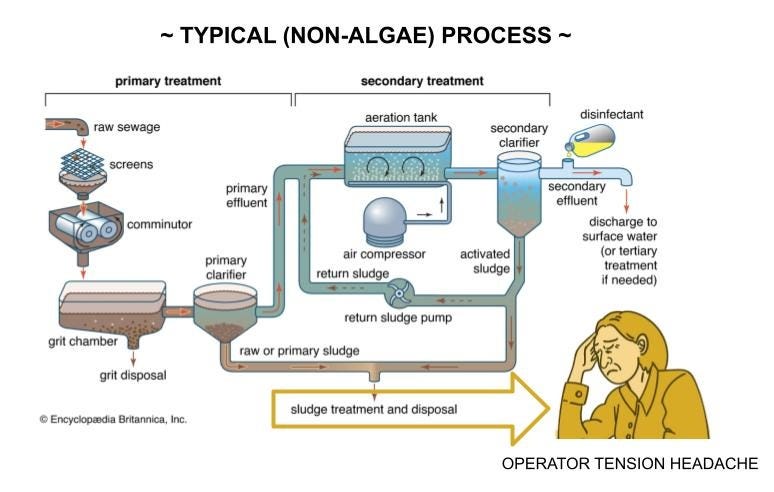
First, you’ve got primary sludge, the raw biosolids. These get filtered through screens and grit chambers into sedimentation tanks, where they naturally settle. It’s a low-tech, physical process and the first line of defense. In municipal wastewater, this is your toilet and shower debris. You don’t need to be a wastewater operator to understand that this encompasses quite a range of items. Put another way, juvenile Atlantic salmon don’t buy their own cocaine… Currently, these biosolids aren’t algae’s problem to solve.
But secondary treatment sludge, or Waste Activated Sludge, is a problem algae can help with. There are many ways to skin the cat (so to speak) to remove suspended and dissolved materials from wastewater after primary treatment. But often, aerobic bacteria are introduced to break down organic materials, and as they reproduce, they create a biological semi-solid. This is basically the same concept as the algal biofilm growth. But instead of producing feedstock for bio-based materials, you get a hazardous burden that’s not easy or cheap to get rid of.
From the energy and labor required to dewater it to the hauling invoices, fuel surcharges, and landfill tipping fees, it’s a big headache for the 1-2% of influent that becomes disposable sludge. But with algae in the treatment train, you can take all the effort, time, and money to dispose of this useless nuisance, and invert it. Instead of paying to remove secondary sludge, you (the operator) can just sell the algae you grow. (And I know this sentence sounds very LLM, but I’m keeping it:) That’s not a waste stream; it’s a revenue stream.
That is, of course, if you’re turning it into something valuable.
LAYING THE GROUNDWORK
Once harvested, the algal biomass (algae sludge?) can be converted into several products. Some make economic sense now, and some don’t yet. Either way, the positioning to live the dream wherein ratepayers get checks for flushing, and waste pays, is primed.
We’ve already discussed a few of these potential uses, vis-a-vis the RABR pilot. Biofuels didn’t pencil out at that time. Bioplastics seemed to work, fire retardants seemed promising, and fertilizer and soil amendments were notable, but underexplored. And it’s here, in the use case that the Department of Energy thought to be a waste of time (ironically), that there appears to be an initial beachhead for the algal-wastewater biorefinery model.
But quickly, and don’t yell at me for saying this, maybe there is still a glimmer of hope for sustainable aviation fuels.
It should be noted that at the time of writing, the Strait of Hormuz is still closed. It’s been effectively closed since late February of 2026. I’m not a Polymarket prognosticator, but one can only guess when (if ever) we’ll be seeing ships pass through that Strait at pre-Iran-War volume. And while the price at the pump has been the primary headline regarding shipping disruptions, the seasonal need for the fertilizer feedstocks is now becoming painfully clear to farmers across the globe. 33% of all fertilizer traded by sea used to pass through that Strait. That’s a tough valve to shut without a ripple of some major costs and logistics.
According to 2026 Fertilizer & Nutrient Congress, Anhydrous ammonia prices broke above $1,100 per ton last week, up 30 percent since late February 2026. And in a survey they conducted in April 2026, roughly 70% of US farmers were unable to afford all fertilizer inputs needed for the current planting season. This is why the US government is scrambling to fast-track domestic ammonia supply, pouring billions into hasty efforts.
So we have a desperate need for fertilizer feedstock, combined with algae’s ability to absorb chemicals useful for fertilizers. And while it may not be actionable (we can’t convert algae biomass so easily into soil-injectable Anhydrous ammonia, and the infrastructure is nowhere near ready for the capacity needed today), it’s a strong signal. We need a reliable, effective fertilizer. Bioplastic sunglasses, by comparison, are very much a “nice-to-have.”
And that’s where the field-leading players are setting up, either in-house or in preparation as a supplier. It’s another practical choice that stems from a real need and plays to algae’s biochemical strengths. For example, GWT is producing its own pelletized fertilizer, AlgaePro D90.
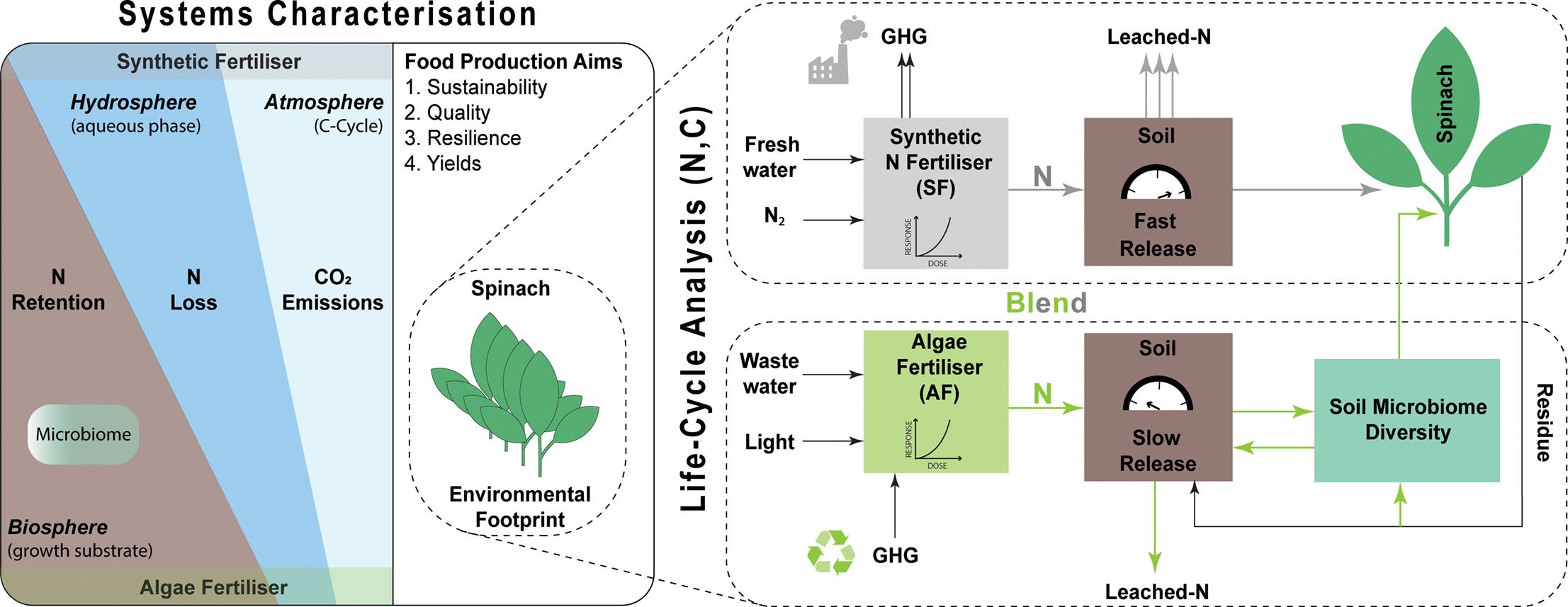
This should really be its own post, but algae as fertilizer or soil amendment works well in a variety of ways. Ever since coastal farmers began pulling seaweed off tidal rocks and mixing it with the soil, as pure intuition, it’s become increasingly clear and robustly demonstrated that algae help plants grow. Through slow release, they can improve soil health/the soil microbiome, increase water retention, and increase nutrient use efficiency (NUE).
Algae-based fertilizers and soil amendments offer a multi-faceted approach to agricultural sustainability by enhancing the biological, physical, and chemical properties of soil. Unlike synthetic alternatives, these biological products transform wastewater-derived nutrients into a slow-release, high-value asset that improves crop performance while protecting environmental health.
Field trials conducted by Gross-Wen Technologies on crops like corn, wheat, and potatoes have demonstrated yield increases of approximately 10% even when synthetic nitrogen application was reduced, proving that the algae supplement allows the plant to do more with fewer inputs.
But there’s also a new kid on the block, at least in terms of climate-centric excitement: biochar. And this brings us back to Utah as well.
Climate people like biochar because it’s basically a carbon sink. When algae (in our case -- but it could be a number of other feedstocks) biomass is heated in a virtually no-oxygen environment (somewhere between 300°C and 800°C), in a process called pyrolysis. It’s thermo-chemically converted to lock in carbon, becoming a highly porous, charcoal-like substance. The lack of oxygen decomposes and chemically rearranges the biomass into a stable carbon framework. The pores also increase aeration, water retention, and nutrient retention in the soil, among other things. And this is why farmers like it. And algae biochar in particular, with high concentrations of phosphorus and nitrogen (which can lock into the carbon framework, depending on the temperature of pyrolysis), can also act like a very slow-release soil amendment.
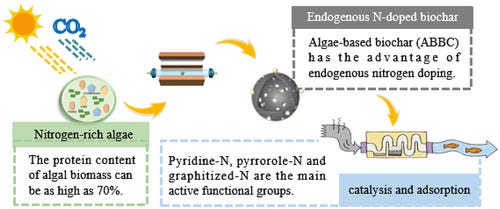
And there’s another innovative early-stage algae wastewater treatment effort in Utah (obviously, right?), doing just that. Airbuild is approaching the cultivation and harvesting in a different way -- by panel/pod, as opposed to an attached growth bioreactor, but they’re also leaning more directly into the value-add from biochar production.
I’ve been an active spectator and booster for the Airbuild team, so it’s exciting to see them build on their success and happy municipal customers out in Green River. Looking forward to a lot more from them. And Albon, too. Albon is another early-stage effort turning wastewater algae into biochar, starting out in Australia. Members of the UTS Greenlight Accelerator gang (where Blob favorite Algenie is also among the alumni), the team appears to be pitching, piloting, and stacking some wins in startup competitions.
TALKING THE TOX
This road leads, inevitably, to the toxicity question: You’re taking wastewater, which has pollutants in it, and putting it into the soil -- and why isn’t that harmful to plants? Seems like a reasonable/logical concern. Microalgae and macroalgae are both great at adsorption and uptake from the water. Depending on the water, that means they’re not just accumulating nitrogen and phosphorus. They might be consuming heavy metals, pharmaceutical waste, PFAS, and other organisms of concern. Taking contaminants directly from the wastewater stream and applying them to land seems to perpetuate a more hazardous kind of circularity.
For biochar products, the response is pyrolysis. The high temperatures needed for pyrolysis break down most organic contaminants, such as pesticides, antibiotics, and hormones. The bonds that hold those molecules together don’t make it through the process intact. Heavy metals don’t break down or disintegrate, but they do get locked into that stable, porous carbon matrix, which makes the metals less likely to leach back into the soil. And while plants like sunflowers and wildflowers are famously capable of absorbing metals from the soil, like nickel, they’re not as thirsty for heavy metals as they are for nutrients like nitrogen anyway.
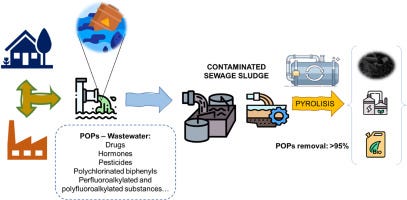
For pelletized fertilizer, it’s more of a straightforward GIGO (garbage-in-garbage-out) story. Municipal wastewater may have contaminants, but it doesn’t have the same kinds and levels of contaminants that might be found in, say, a mining operation. So the waters from which GWT grows its biofilm-turned-fertilizer are notably less toxic than some other influent streams to begin with. The systems can also be placed strategically into the most appropriate side streams to engineer the most effective growth medium for a fertilizer downstream. It’s a controlled, highly monitored environment.
So either by pyrolysis or engineering controls, algae can very doably emerge from the wastestream as both an economic and ecological value-add. And I wish this weren’t true, but the amount that the ecological benefits matter to customers seems just about equal to the amount of oxygen in the pyrolysis process. Thank goodness the numbers work.
OCCAM’S RABR
Say the systems coming online work well as-is, no significant changes needed, just more adoption, deployment, competition, etc. You can’t help but wonder, just how much better could these systems be?
Of course, entrepreneurs like GWT and AlgaFilm need to stay focused. The last prudent move for an early-stage company would be to spread themselves too thin, or to go two steps back into lab solutions they already have commercial solutions for. GWT wants to be the John Deere of Algae-culture, and entrepreneurs of the year don’t go down frivolous R&D rabbit holes. AlgaFilm, too, is built on the strength of a widely adopted commercial innovation in ultrafiltration technology. In short, no time for daydreaming.
But The Blob has no fiduciary responsibilities, and therefore, the flexibility to pursue the highly impractical.
Following the basic, dangerous logic of someone who knows just enough, I was hoping to posit some kind of future application that (regulator-blind) might unlock a new one or accelerate another known one. Something kinda out there, bring it back to space.
In my last long-form post, for example, I posited an algal-based cryptography system (which I still think someone should develop).
Completely suspending our disbelief about what regulators may think and approve, a lot of the exciting potential/future developments involve introducing new features and creatures into the wastewater itself, precision-engineered strains that could make the most of the environment.
So I wanted this section to be a wacky synbio “what-if” closer. And I tried.
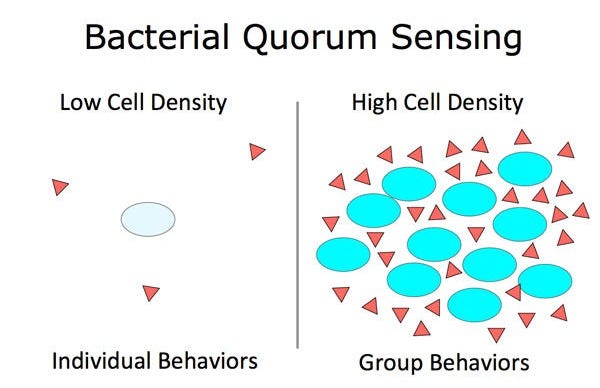
Following the field of Quorum Sensing, and particularly the work of Bonnie Bassler, I was thinking: maybe there could be a way to engineer the behavior of the bacterial consortium within the biofilm itself, triggering some kind of specialized production or targeted flocculation when the algal biofilm reaches a certain density. These lines of inquiry, however, seem to land mostly in the realm of science fiction. Speculative fun for amateur musings.
What about algae for microplastics? There’s a team at the University of Missouri (another no-coast algae innovation!) who’ve recently published a design concept for the Remediation and Upcycling of Microplastics by Algae (or RUMBA), using genetically engineered cyanobacteria. Very cool, and very lab scale.
What about introducing a novel extremophile strain? Possible, maybe. Would it outcompete the algae in the environment? Who would dare to find out?
What about introducing nanoparticles? The introduction of nanoparticles could transport genetic material directly into algal cells, like a gene water gun (pardon the fast and loose comparison). Or they could increase lipid production through oxidative stress.
But again, engineering a targeted result in a wastewater facility, for results at scale, maybe that’s not a lipid oil worth the squeeze. Then suddenly, in a forehead-slapping moment, I realized I’d missed the point entirely.
What’s truly great and impactful about algae systems in wastewater is exactly how well it already works, with no fancy footwork. There’s no need for an engineered superstar strain, a next-gen bioreactor, a new consumer behavior, or an optimized supply chain. The value is right there already. It just happens to echo in a way that could catalyze the use of algae as a commercial feedstock downstream.
And with that clarity, I had my ending. Simple as that.
THE PAPERS
· Abdelfattah A, Ali SS, Ramadan H, El-Aswar EI, Eltawab R, Ho SH, Elsamahy T, Li S, El-Sheekh MM, Schagerl M, Kornaros M, Sun J. “Microalgae-based wastewater treatment: Mechanisms, challenges, recent advances, and future prospects.” Environ Sci Ecotechnol. 2022 Sep 8;13:100205. doi: 10.1016/j.ese.2022.100205. PMID: 36247722; PMCID: PMC9557874.
· Das, P., et al. (2023). “A critical review on remediation of microplastics using microalgae from aqueous system.“ Payal Das, Gopinath Halder, Manisha Bal, Science of The Total Environment,Volume 898, 2023,166425, ISSN 0048-9697,
· Félix Gaspar Gonzalo Ibrahim, Raúl Muñoz Torre, Ana María Botero Coy, Félix Hernandez, Ignacio de Godos Crespo, “Performance comparison of microalgae-based and activated sludge with membrane filtration (AS-MBR) for emerging contaminant removal and wastewater reuse, Journal of Hazardous Materials”, Volume 501, 2026, 140553, ISSN 0304-3894,
· Martin Gross, Wesley Henry, Clayton Michael, Zhiyou Wen, “Development of a rotating algal biofilm growth system for attached microalgae growth with in situ biomass harvest”, Bioresource Technology, Volume 150, 2013, 195–201, ISSN 0960-8524.
· Martin Gross, Zhiyou Wen, “Yearlong evaluation of performance and durability of a pilot-scale Revolving Algal Biofilm (RAB) cultivation system”, Bioresource Technology, Volume 171, 2014, 50–58, ISSN 0960-8524.
· Martin Gross, Vernon Mascarenhas, Zhiyou Wen, “Evaluating algal growth performance and water use efficiency of pilot-scale revolving algal biofilm (RAB) culture systems”, Biotechnology and Bioengineering, Volume 112, 2015, 2040–2050, ISSN 0006-3592.
· Martin Gross, Xuefei Zhao, Vernon Mascarenhas, Zhiyou Wen, “Effects of the surface physico-chemical properties and the surface textures on the initial colonization and the attached growth in algal biofilm”, Biotechnology for Biofuels, Volume 9, 2016, 38, ISSN 1754-6834.
· Andrew H. Kim, Anthony C. Yu, Sahar H. El Abbadi, Katie Lu, Doreen Chan, Eric A. Appel, Craig S. Criddle, “More than a fertilizer: wastewater-derived struvite as a high value, sustainable fire retardant”, Green Chemistry, Volume 23, 2021, 4510-4523, ISSN 1463-9262
· J. Lindsey, A. W. Thoms, J. Dancer, M. Gross, “Evaluation of Algae-Based Fertilizers Produced from Revolving Algal Biofilms on Kentucky Bluegrass”, Agronomy, Volume 11, 2021, 1288, ISSN 2073-4395.
· Xiao-ya Liu, Yu Hong, “Microalgae-Based Wastewater Treatment and Recovery with Biomass and Value-Added Products: A Brief Review”, Current Pollution Reports, Volume 7, 2021, 227–245, ISSN 2198-6592.
· Giovanni Antonio Lutzu, Adriana Ciurli, Carolina Chiellini, Fabrizio Di Caprio, Alessandro Concas, Nurhan Turgut Dunford, “Latest developments in wastewater treatment and biopolymer production by microalgae”, Journal of Environmental Chemical Engineering, Volume 8, 2020, 104926, ISSN 2213-3437.
· Amritpreet Kaur Minhas, Suchitra Gaur, Sharon Sunny, Chaturya Paladugu, Gokare Aswathanarayana Ravishankar, Leonel Pereira, Ranga Rao Ambati, “Microalgae-Based Wastewater Treatment Processes for the Bioremediation and Valorization of Biomass: A Review”, Phycology, Volume 6, 2026, 18, ISSN 2673-9410.
· Aira Muzammal, Iqra Zahoor, “Assessment of algae-based domestic wastewater treatment resource recovery, effluent quality, cost analysis and life cycle: a review”, International Journal of Chemical and Biochemical Sciences (IJCBS), Volume 24, 2023, 176-192, ISSN 2226-9614.
· Luong N. Nguyen, Lisa Aditya, Hang P. Vu, Abu Hasan Johir, Lucia Bennar, Peter Ralph, Ngoc B. Hoang, Jakub Zdarta, Long D. Nghiem, “Nutrient Removal by Algae-Based Wastewater Treatment”, Current Pollution Reports, 2022, doi: 10.1007/s40726-022-00230-x, ISSN 2198-6592.
· Pereira ASAP, Silva TAD, Magalhães IB, Ferreira J, Braga MQ, Lorentz JF, Assemany PP, Couto EAD, Calijuri ML., “Biocompounds from wastewater-grown microalgae: a review of emerging cultivation and harvesting technologies”, Science of the Total Environment, Volume 920, 2024, 170918, ISSN 0048-9697.
· Alejandro Pérez Mesa, Paula Andrea Céspedes Grattz, Juan José Vidal Vargas, Luis Alberto Ríos, David Ocampo Echeverri, “Techno-Economic Assessment of Microalgae-Based Biofertilizer Production from Municipal Wastewater Using Scenedesmus sp.”, Water, Volume 17, 2025, 2941, ISSN 2073-4441.
· Jiangqi Qu, Ruijun Ren, Zhanhui Wu, Jie Huang, Qingjing Zhang, “From Waste to Resource: Algal–Bacterial Systems and Immobilization Techniques in Aquaculture Effluent Treatment”, Clean Technologies, Volume 7, 2025, 97, ISSN 2571-8797.
· Luis G. Ramírez Mérida, Raúl A. Rodríguez Padrón, “Application of microalgae in wastewater: opportunity for sustainable development”, Frontiers in Environmental Science, Volume 11, 2023, 1238640, ISSN 2296-665X.
· Erfan Sadatshojaei, Dariush Mowla, David A. Wood, “Review of Progress in Microalgal Biotechnology Applied to Wastewater Treatment”, Sustainable Green Chemical Processes and their Allied Applications, 2020, 539-562, ISSN 2364-1657.
· Schaedig E, Cantrell M, Urban C, Zhao X, Greene D, Dancer J, Gross M, Sebesta J, Chou KJ, Grabowy J, Gross M, Kumar K, Yu J.,“Isolation of phosphorus-hyperaccumulating microalgae from revolving algal biofilm (RAB) wastewater treatment systems”, Frontiers in Microbiology, Volume 14, 2023, 1219318, ISSN 1664-302X.
· Jacob Watkins, Yunhua Zhu, Peter Valdez, Clayton Lords, Ashton Zeller, Pavlo Bohutskyi, Ronald C. Sims, “Algae-based bioplastics: A techno-economic analysis of a rotating algae biofilm reactor (RABR) system”, Algal Research, Volume 84, 2024, 103774, ISSN 2211-9264.
· Xuefei Zhao, Kuldip Kumar, Martin A. Gross, Thomas E. Kunetz, Zhiyou Wen, “Evaluation of Revolving Algae Biofilm Reactors for Nutrients and Metals Removal from Sludge Thickening Supernatant in a Municipal Wastewater Treatment Facility”, Water Research, Volume 143, 2018, 467–478, ISSN 0043-1354.
THE CARTOON 🙃

Loved this! Thank you for the smorgasbord of ideas! And so funny.
As always, endlessly creative Greg!